Stories of grace

Stories of hope and inspiration
The transformative power of support, faith and purpose in overcoming adversity

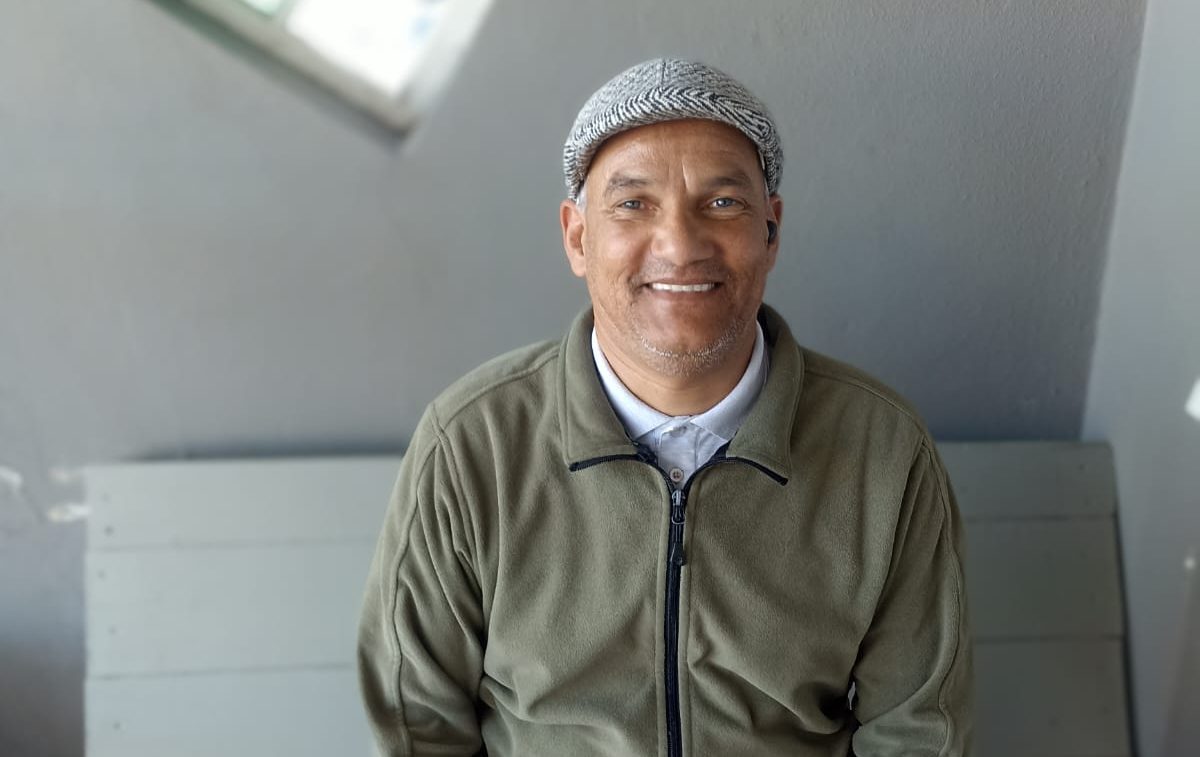
Cobern Borcherds is an inspirational 52-year-old who participates in the MES Work Readiness programme and works as a team administrator. He lives in a second-phase sheltered accommodation with other men, finding the environment positive and uplifting. Cobern's faith has profoundly impacted his life's journey. He credits knowing God for his care through tough times and recommends "The Ragamuffin Gospel" by Brennan Manning, a book highlighting Jesus's compassion for the imperfect. Coming from a low-income background in Woodstock, where he lived on the same property with six other families and a single water source. Cobern admired his hard-working mother, whose dedication he respected. Despite a modest upbringing and having once secured a well-paying job in the tourism industry, his life took a turn when he became embroiled in drug addiction, spending exorbitantly on heroin and crystal meth. He lost his job and fell into a deep depression, coupled with periods of living on the streets. His time on the streets in Bellville was marked by deep suffering and a struggle with addiction, often living in unhealthy conditions and engaging in destructive relationships. Cobern and his partner shared a co-dependent relationship marred by substance abuse. His partner fell pregnant, and as they were unable to care for their new son, foster care was the only option. Recognizing the toxicity of their relationship and its impact on their recovery, they made the difficult decision to separate and focus on their individual healing journeys amicably. Cobern's story is one of resilience and transformation. Despite battling addiction, homelessness, and personal downturns, his faith and the support of social programs have been pivotal in his recovery. His experience underscores the importance of hope, individual determination, and the role of community support in overcoming life's challenges. Cobern, having faced numerous turning points in his life, recalls the significant moment when he turned to prayer upon learning of his partner's pregnancy. His journey of calling upon God for support spans over 30 years, marked by a deep desire to be an active father to his child, signalling a turning point when he and the mother of his child chose to separate and seek recovery independently despite facing challenges. Since 2021, Cobern has participated in the MES programme, starting at the Bellville Safe Space and Centre of Hope. He credits the programme and God for his transformation, highlighting how it has allowed him to rediscover his potential, reconnect with his roles within the community, and recover from relapse through continuous work on underlying issues. Cobern has embraced his work, enjoyed personal growth, and furthered his agricultural knowledge through a course in 2023, leading to significant life improvements, including mending his relationship with his eldest daughter and setting goals for financial stability and personal development. Cobern's aspirations include writing a book to share his journey, mentoring others, developing a supportive network, and establishing a small holding to aid recovery in others through agriculture. His guiding principles focus on making good choices, acknowledging his faith, understanding his vulnerabilities, and ...

Siphelo, a testament to resilience

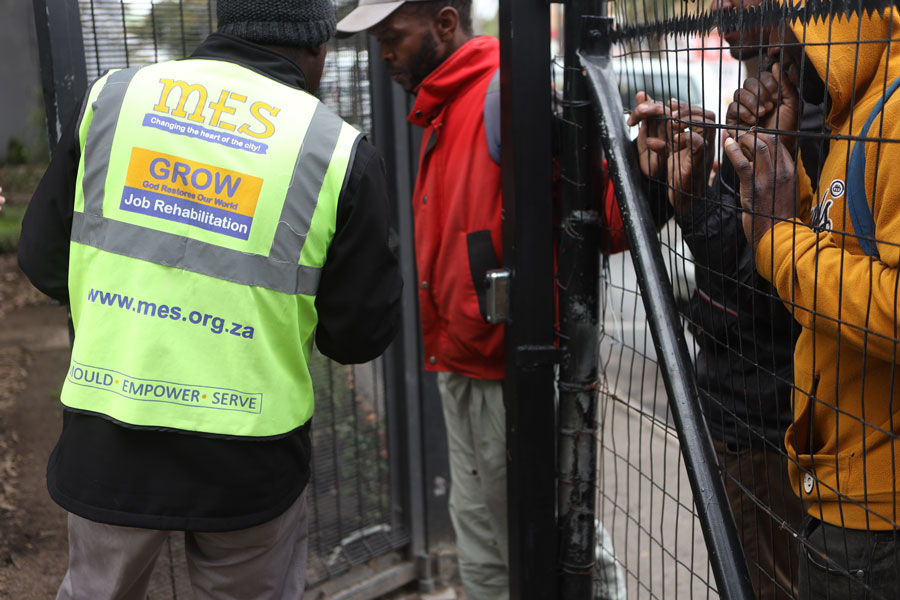
Having completed his outpatient rehab programme with SANCA, which he embarked on in March 2023, Siphelo Phiri sees this as a pivotal moment in his life. He is optimistic that this achievement is just the beginning of a series of remarkable milestones. Before coming to MES in Kempton Park, Phiri was employed at a health institute and living in Alexandra. His employment contract ended in September 2021, and unfortunately, this opened a door for him down a road of destruction. Being unemployed put him under tremendous stress, and he went back to using drugs, and in no time, he was homeless. Not long after being homeless, he found himself living in Randburg. While living at the shelter, he received the news that his mother had passed on. Originally from the Eastern Cape, he knew he had to make a way back to his hometown to bury her. Unfortunately, one of the rules of the shelter was that if you exited yourself, you could not come back, so he decided to go home with the knowledge that he would be homeless if he returned. Apart from seeking accommodation, Phiri's priority when arriving at MES was finding a job to sustain himself, but this journey had other plans. He was fortunate enough to be chosen to be one of the MES beneficiaries to do a skills development course – not only one course but two. The first course was Plant Production, and the second was Perishable Product Exportation. Phiri will complete the practical component for the second course at Tembisa Hospital while he waits for permanent employment. He mentioned that the therapeutic sessions and support groups have been instrumental in changing his mindset and perspective. He said that they have not only helped him open up about his drug problem but also instilled in him a sense of patience and a willingness to seize opportunities, even if they weren't exactly what he wanted. Phiri looks forward to what the future has in store with hope and optimism. He is still very hopeful that he will find a job to exit the shelter, sustain himself and start his life on a clean slate. In parting, he shared, "Even though I haven't found a job yet, being at MES has helped me upskill myself, increasing my chance of employment. More importantly, MES has helped me improve my character and gain a positive attitude and mindset. These things are worth far more than money can buy, and I will always be grateful." His hope for the future is a testament to his resilience and the transformative power of rehabilitation, personal development and the impact of the MES phased interventions.

A second chance for Pertucia

Pertucia Erasmus (38) first came across MES in March 2022 when she was looking for a job and would hear people talking about us. For three months, she initially experienced MES services through the KFC Add Hope food hamper distributions and personal and family development Bible sessions. These services provided her with essential food items and helped her find a sense of community and spiritual guidance, for which she continues to express her gratitude. Soon after, she participated in the GROW Work Rehabilitation programme as a cleaner. This programme, designed to provide employment opportunities and skills training to needy individuals, was a turning point in Pertucia's life. Her role at GROW resulted in her selection for the Better Belville Together team to work in the graffiti and gardening division. In this team, she is the second in command (2IC) when her supervisor is not present, another opportunity for which she is grateful. Pertucia shares that before she encountered MES, she suffered from alcohol and drug abuse. Fortunately, she found her path towards the Lord away from her previous lifestyle and is now familiar with the Bible taught in the sessions at the MES Cape Town centres. Pertucia says she carries a pocket Bible everywhere she goes. This transformation is a testament to MES's impactful work; your support makes it all possible. Pertucia expresses her gratitude to the MES donors: "I am grateful for the donors because if it weren't for you, some people would still be collecting tins or 2-litre bottles just to put food on the table. We thank you for supporting the MES team and all the partnerships that help us as human beings, parents and single mothers who need it." All the efforts from donors and MES staff do not go unnoticed. Vulnerable families and individuals receive food daily. Pertucia shares how painful it was when her son and daughter would tell her they were hungry, and she had no option except to shoplift to relieve their hunger. She is not proud of those actions but acknowledges MES' significant difference in her and her children's lives. Your support impacts not just individuals like Pertucia but also their families, making a profound difference in their lives.

Liezel lands a permanent job

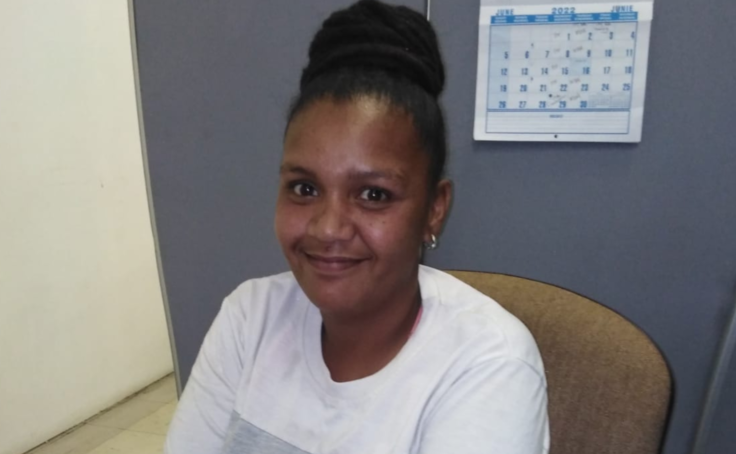
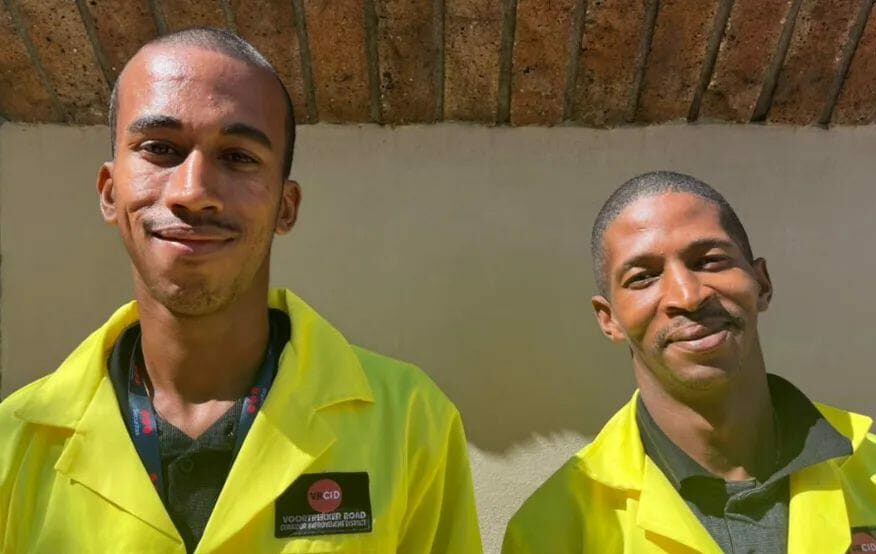
Liezel Moses is a 26-year-old mother, who arrived at our drop-in centre in Parow on the 18th of January 2022, looking for a job opportunity. She helps to support her family, including her parents, while caring for her own children, since none of them are employed.    After losing her partner of eight years in a car accident, she has been making her way toward healing and finding peace, step by step.   Liezel was referred to, our job rehabilitation program, GROW, and was then given the opportunity to partake in the PEP program, because of her tenacity.  Last Friday, Liezel received the wonderful news about landing her permanent job with the VRCID, our valued stakeholders.   Her new permanent employment contract started on Monday, 13 June 2022.  "We’re so proud of Liezel and the progress that she’s making.” - Anelle Erasmus, MES Marketing Manager 

MES, my saving grace

Like many others, Mpendulo Mahlalela (26) left his hometown and moved to Gauteng in search of employment opportunities. Mpendulo grew up in Jeppes Reef, Mpumalanga. He was raised by his Grandmother and completed his matric in 2015. After his Grandmother passed away, Mpendulo realised that he didn’t have anyone to lean on for financial support. He decided to go in search of a job somewhere else as he wasn’t having any luck in his hometown. Mpendulo arrived in Germiston at the end of 2021 with hopes of finding employment and a better life. But he was alone with no one to call or anywhere to go. After spending a week looking for work and living on the streets of Germiston, Mpendulo decided to leave and try his luck in Kempton Park. Mpendulo spent three days living next to a taxi rank in Kempton Park. This was where he met someone who told him about MES Kempton Park. He immediately made his way to us in search of shelter. Mpendulo has been with us since and he is determined to build a better life for himself. He has just joined the GROW job rehabilitation team. He shared that: “MES Kempton Park has given me more than I was looking for. Firstly, I am grateful for the humble service that I have received from the staff. I was welcomed without judgment and with patience and persistence my Social Worker continues to work with me through my various challenges”. “While working at GROW, my hope has been restored because I know that I have something to look forward to the following day, instead of sitting around aimlessly.” Mpendulo arrived in Germiston at the end of 2021 with hopes of finding employment and a better life.

Young heart changed and turned around for the better

A young heart changed and turned around for the better Rochihauno Ford (26) has been a participant in our GROW programme since April 2021. Unemployed, Ford approached us in search of help and received job rehabilitation support through GROW. Throughout his journey within the programme, Ford showed great potential, he was always on time and eager to learn. His stepfather, unfortunately, passed away last year, leaving him and his 2 siblings without financial support. Rochihauno enjoyed a special bond with his stepfather who was always there for him. His passing not only put the family in a financially vulnerable situation but has also taken a massive emotional toll on them. Rochihauno returned to the centre, put in extra effort, worked harder than before and soon became a GROW team leader. MES has been a place of spiritual and emotional support for him and has arranged for counselling to help him through the healing process. We are humbled by Ford’s personal journey and inspired by his resilience. He was awarded a place within the Public Employment Programme (PEP) as a team supervisor. Today, his good work ethic and positive attitude have landed him a permanent position at the VRCID cleaning department. Rochihauno Ford (26) has been a participant in our GROW programme since April 2021.

Meet Senzo, a MES outreach worker from Cape Town

Meet Senzo, a MES outreach worker from Cape Town "It humbles me, each day I meet people who have degrees and who wanted to be something in life, it happened to them."  - Senzo Madida, 21 Outreach Worker for MES Cape Town. Outreach with MES entails going out on the street to find out where homeless people sleep, and to build relationships with them. The goal is to network and inform them about the services that we have to offer. "I go out and see where they are living and see why they are there", says Senzo, a MES Outreach Worker in Durbanville, who sees roughly 45-50 homeless people each week. According to Senzo, building relationships with those in need is key to getting them to trust you enough to accept help. To achieve this, Senzo works closely with officials at the City of Cape Town. As soon as they inform Senzo about new tents being pitched by the homeless, he accompanies them to where the need is, offering services and support to the homeless. "Most importantly, I build trust. We need to go on the street and tell those in need what we can do to help them. They need to be able to trust us enough to let us help them. Usually, we judge people without understanding what led someone into that situation", says Senzo. "Usually, the first thing that people need is an identity document, so that they can get a job. That's one of the first things that I assist them with", he continued. According to Senzo, anecdotally, almost all of the people who are on the streets in his area are from other parts of the country. Usually, they came to Cape Town in search of better opportunities. However, they don’t have any friends or family here, which leaves them with no support structure. In doing outreach, Senzo tells, you also come across those who were transferred to a prison in Cape Town from other parts of the country. Upon release, they're either too ashamed to return home, or their families flat-out reject them. Their chances of getting a job are exceedingly low because employers don't take kindly to criminal records. In his experience, Senzo has seen a cycle emerge among those released onto the street after having been in prison: "They live on the street for two weeks before being introduced to drugs, after that, the likelihood of them getting off the streets is very low indeed", Senzo elaborated. "There are also those who want to go back to prison because, after a month on the streets, they find that life was better in prison, so they commit other offences to go back", he added. For most people, getting off the street is very difficult. It takes a lot of hard work and dedication from both the outreach and social worker, and the homeless person in question, to make it happen. Senzo went on to share what the most profound impact that ...

Go to Top